
 Português
 Deutsch
 Français
 русский
 Italiano
 日本語
 عربي
 Español




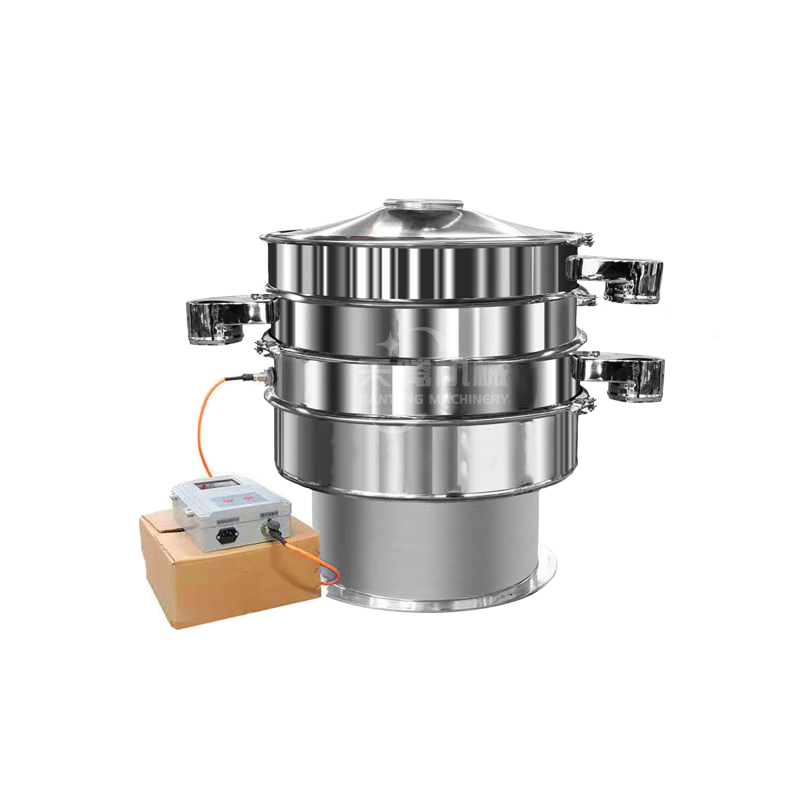
Pharmaceutical sieves play an important role in powder processing, helping separate oversized particles and screen for foreign material before the next production stage. For manufacturers working with active pharmaceutical ingredients (APIs) and excipients, selecting the right screening system means considering product quality, hygiene, operator safety and cleaning requirements together.
Tianteng helps customers explore screening solutions for their materials and production needs. From routine safety screening to fine powder separation, equipment selection should begin with the characteristics of the powder and the intended process.
Hygienic Design for Pharmaceutical Powder Processing
Sanitary sieving equipment should be easy to inspect, disassemble and clean. Smooth product-contact surfaces and accessible components can help reduce powder retention and make changeovers more manageable. The final design should be reviewed against the customer’s cleaning procedures and contamination-control requirements.
When specifying a pharmaceutical sieve, discuss product-contact materials, gasket compatibility and surface finish with the supplier. Where 316 or 316L stainless steel is required, confirm the grade and supporting documentation for the selected model. Any specified surface roughness or polished finish should also be agreed in advance rather than assumed from the equipment’s appearance.
Screening APIs and Excipients
A correctly selected mesh can help remove oversized particles and foreign material larger than its openings while allowing the intended powder fraction to pass. Screening performance depends on particle size distribution, moisture, bulk density, flow behavior and feed rate. Mesh integrity checks and appropriate handling remain essential parts of the process.
For a useful equipment evaluation, provide a representative sample and define the target particle size, required throughput and acceptable product loss. Trials can then help assess separation quality and determine whether the proposed configuration fits the application.
Ultrasonic Assistance for Fine Powders
Fine or cohesive powders may adhere to the mesh and restrict screening. An ultrasonic vibrating sieve adds high-frequency excitation to the screen to help reduce mesh blinding in suitable applications. Its effectiveness should be assessed with the actual material, since results vary with powder properties, mesh size and operating conditions.
Cleaning, Documentation and Process Qualification
Easy access to contact parts can support cleaning and inspection, but equipment alone does not establish regulatory compliance. Pharmaceutical manufacturers should evaluate the machine within their own quality system, including cleaning validation, process qualification, containment needs and applicable regulatory requirements. Confirm the documentation available for the chosen equipment before purchase.
Discuss Your Application with Tianteng
Looking for pharmaceutical sieves for API or excipient screening? Share your material properties, mesh specification, capacity target and hygiene requirements with Tianteng. Our team can discuss a suitable configuration and the testing needed to evaluate its performance in your process.


